Elcam Bioprocess
 Elcam Drug Delivery Devices
Gamma and E-Beam Compatible High-Pressure Stopcocks: A Sterilization Solution
Tomer Gil
Gamma- and e-beam-compatible high-pressure stopcocks give OEMs sterilization flexibility without sacrificing cath-lab pressure performance. Elcam’s HP+ high-pressure stopcocks are designed to support Gamma and E-Beam sterilization while maintaining 1200 PSI performance for interventional and cath lab applications.
For OEMs building cath-lab kits, this compatibility helps reduce dependency on ETO-only configurations and supports broader sterilization planning at the full kit level.
Cath lab procedures often require pressures of 1,200 PSI—approximately 90 atmospheres or eight times the pressure of firefighting hoses—to inject contrast media through narrow vascular pathways. High-pressure stopcocks operating under these extreme conditions have traditionally faced sterilization challenges that Elcam’s new HP+ stopcocks now address.
The ETO Sterilization Challenge
Most medical devices rely on ETO (Ethylene Oxide) sterilization, which uses poisonous gas in a 24-hour process. While widely used, ETO presents several issues:
- Health and environmental risks from toxic gas exposure, including complex post-processing to remove toxic residue
- Questionable sterilization of stopcocks due to tight component seals that prevent gas penetration
- Extended processing times that impact operational efficiency
For high-pressure stopcocks specifically, the tight seal between handle and body components-necessary to prevent leakage under pressure-blocks ETO gas from reaching internal surfaces. This creates a fundamental sterilization gap where the sterilization of the most critical interface areas remains controversial, raising concerns about the effectiveness of gas sterilization for these devices.
Why ETO Can Be Challenging for High-Pressure Stopcock Designs
ETO sterilization is widely used across medical device manufacturing, but high-pressure stopcocks create a specific technical challenge. These components depend on tight seals and precise internal interfaces to prevent leakage under pressure. The same design characteristics that support 1200 PSI performance may also make it more difficult for ETO gas to reach critical internal areas.
For OEMs, this creates a kit-level issue. If a high-pressure stopcock is limited to ETO sterilization, the full procedural kit may also be limited to ETO, even when other components are compatible with radiation sterilization. This is why radiation-sterilizable high-pressure stopcocks can provide a meaningful advantage in cath lab and interventional kit design.
The Alternative: Radiation Sterilization
Gamma sterilization uses ionizing radiation to eliminate microorganisms, offering complete penetration of all surfaces, faster processing, and no toxic chemicals. However, it requires nuclear reactor facilities, which many countries lack entirely, and uses a continuous conveyor process.
E-Beam sterilization, a newer method gaining adoption over the last five years, provides similar benefits using electron beams rather than nuclear sources, making it more accessible globally as new facilities don’t require nuclear infrastructure. However, E-Beam uses a batch process that can be more time-consuming than Gamma’s continuous operation.
Both methods are environmentally clean and effectively sterilize hard-to-reach areas that gas cannot penetrate, including the critical interfaces in high-pressure stopcocks. This complete sterilization addresses the fundamental limitation of gas-based methods.
ETO vs. Gamma vs. E-Beam Sterilization for High-Pressure Stopcocks
ETO Sterilization
ETO is a gas-based sterilization method widely used for medical devices. It is familiar and broadly accepted, but in high-pressure stopcock designs, tight seals and internal component interfaces may create challenges for gas penetration. This can be especially relevant where the stopcock must maintain reliable performance under high pressure.
Gamma Sterilization
Gamma sterilization uses ionizing radiation and can support strong penetration across device surfaces and internal areas. For high-pressure stopcocks, the key requirement is material compatibility. Components must be designed from materials that remain stable after radiation exposure and continue to support pressure performance, smooth operation, and reliable handling.
E-Beam Sterilization
E-Beam sterilization uses electron-beam radiation and can offer a radiation-based sterilization pathway without relying on nuclear-source infrastructure. Like Gamma, it requires radiation-compatible materials and validated device performance after sterilization.
Why This Matters for OEMs
For OEMs, sterilization compatibility is not only a production detail. It can influence kit design, component selection, validation, packaging, supply chain planning, and market flexibility. A high-pressure stopcock that supports Gamma and E-Beam sterilization allows OEMs to evaluate radiation-compatible configurations from the beginning of product development.
Engineering the Solution
Traditional high-pressure stopcocks use acetal (POM) handles because this material provides excellent pressure resistance and smooth operation. However, acetal becomes brittle and fails when exposed to radiation, making these devices incompatible with Gamma and E-Beam sterilization.
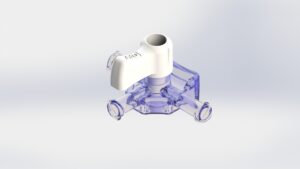
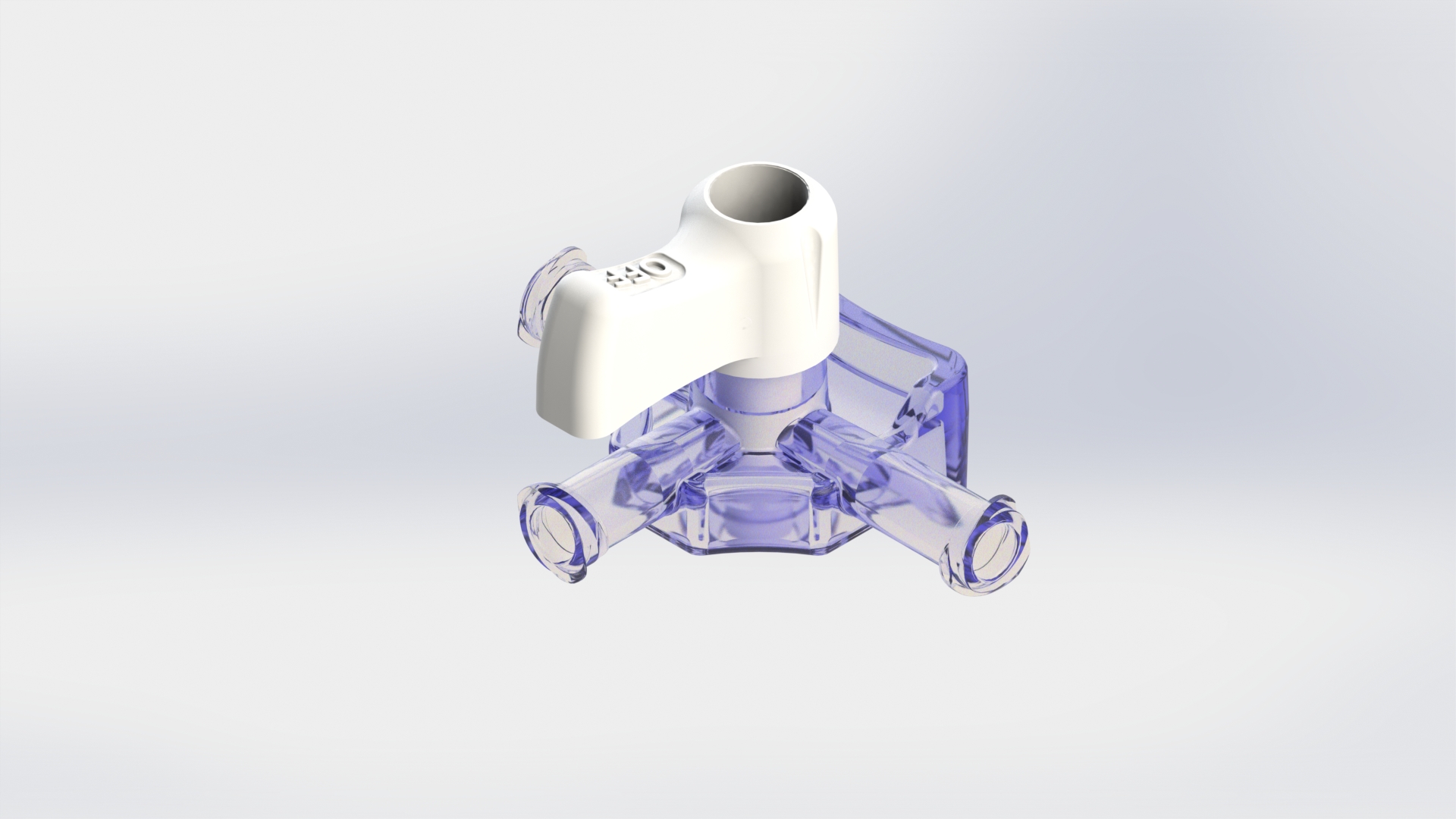
Elcam’s breakthrough uses a specialized polycarbonate for HP+ stopcock handles, thereby:
- Maintaining 1,200 PSI pressure performance
- Remaining stable under Gamma and E-Beam sterilization up to 60 kGy
- Preserving smooth operation after sterilization
- Using special tinting to maintain an attractive appearance post-sterilization
The development also extends to high-pressure rotators, which were easier to engineer for radiation compatibility thanks to a simpler design.
Streamlining Kit Sterilization
A key issue facing medical device manufacturers involves kit assembly. When creating comprehensive medical kits, manufacturers combine multiple components—tubing, connectors, syringes, and stopcocks—into complete procedural sets. Previously, including even a single high-pressure stopcock meant the entire kit could only be sterilized using ETO, because the stopcock would fall apart under Gamma radiation. This limitation affected the sterilization options for complete kits, even when other components were compatible with radiation methods.
With HP+ stopcocks, manufacturers are no longer restricted to ETO sterilization when high-pressure stopcocks are part of their kit assembly.
Market-First Innovation
Elcam currently offers the only high-pressure stopcocks compatible with Gamma and E-Beam sterilization. The HP+ product line includes stopcocks in 1, 3, and 4-way configurations, plus compatible HP+ rotators, all maintaining the same ergonomic design as standard high-pressure products.
This development addresses a specific industry need for sterilization flexibility in high-pressure applications, providing healthcare facilities with safer and more efficient sterilization options for critical interventional procedures.
OEMs building cath lab or interventional procedure kits can use HP+ high-pressure stopcocks to support both pressure performance and sterilization flexibility. Elcam can help evaluate the right stopcock, rotator, and accessory configuration according to specific kit requirements.
Explore Elcam’s High Pressure Stopcocks, review compatible High Pressure Accessories, or learn more about Elcam’s Interventional C&R solutions.
For configuration guidance, contact Elcam Medical.
FAQs
Can high-pressure stopcocks be sterilized with Gamma or E-Beam?
Yes. High-pressure stopcocks can be compatible with Gamma or E-Beam sterilization when they are engineered with radiation-stable materials and validated for the required pressure and handling performance. Elcam’s HP+ high-pressure stopcocks are designed for Gamma and E-Beam compatibility while maintaining 1200 PSI performance.
Why is ETO problematic for some high-pressure stopcock designs?
ETO is gas-based, so tight seals and internal interfaces in high-pressure stopcocks can create challenges for gas penetration. In high-pressure designs, the same tight component fit that helps prevent leakage under pressure can make sterilization access more complex.
What pressure rating should a cath lab stopcock support?
Cath lab and interventional applications often require high-pressure stopcocks designed to withstand 1200 PSI. The exact requirement depends on the procedure, kit design, and fluid pathway configuration.
Why do OEMs need radiation-sterilizable high-pressure stopcocks?
Radiation-sterilizable high-pressure stopcocks give OEMs more flexibility when building complete procedure kits. If the stopcock is compatible with Gamma or E-Beam, the entire kit may have broader sterilization options instead of being limited by a single ETO-only component.
What is the benefit of Gamma and E-Beam compatibility for OEM procedural kits?
Gamma and E-Beam compatibility allows OEMs to design high-pressure procedural kits with broader sterilization options. This can support better kit planning, reduce dependence on ETO-only workflows, and help align component performance with sterilization strategy.