
 Elcam Bioprocess
 Elcam Drug Delivery Devices

Where Engineering Gets Creative: Meet Marisa Medici
When a customer came to Elcam Italy with an unusual request, Marisa Medici’s team faced a very open-ended engineering question.
The customer wanted to prepare an ophthalmic medication using the patient’s own blood to avoid adverse reactions. But they didn’t yet have the connectors and containers they needed to make the complete system work with their equipment. So Marisa’s team had to work out how all the pieces would fit together.
“We looked at several ideas—how to design the bags, which connectors to use, and how to integrate the whole system with the customer’s equipment,” Marisa says. “We made sketches, built prototypes, and presented different possible solutions.”
Marisa has spent more than two decades working through these kinds of questions. She joined Lucomed in the Quality Department before it was acquired by Elcam. Today, she leads an 11-person team as Product Engineering and Development Manager at Elcam Italy.
For Marisa, open-ended requests like this one are precisely where engineering meets creativity.
Defining the Request
People sometimes think engineers work to turn a brief with specifications into a manufacturable product. But Marisa’s team often starts earlier than that.
Customers may come in knowing what a product needs to do without having every technical requirement worked out. Marisa’s team has to close those gaps—making sure specifications are complete—before development even begins.
“Sometimes, at the beginning, we have to make assumptions,” she says. “But before we move into development, those assumptions need to become formal requirements, be documented, and be approved by the customer.”
To get there, the Elcam Italy engineering team needs to gather multiple perspectives.
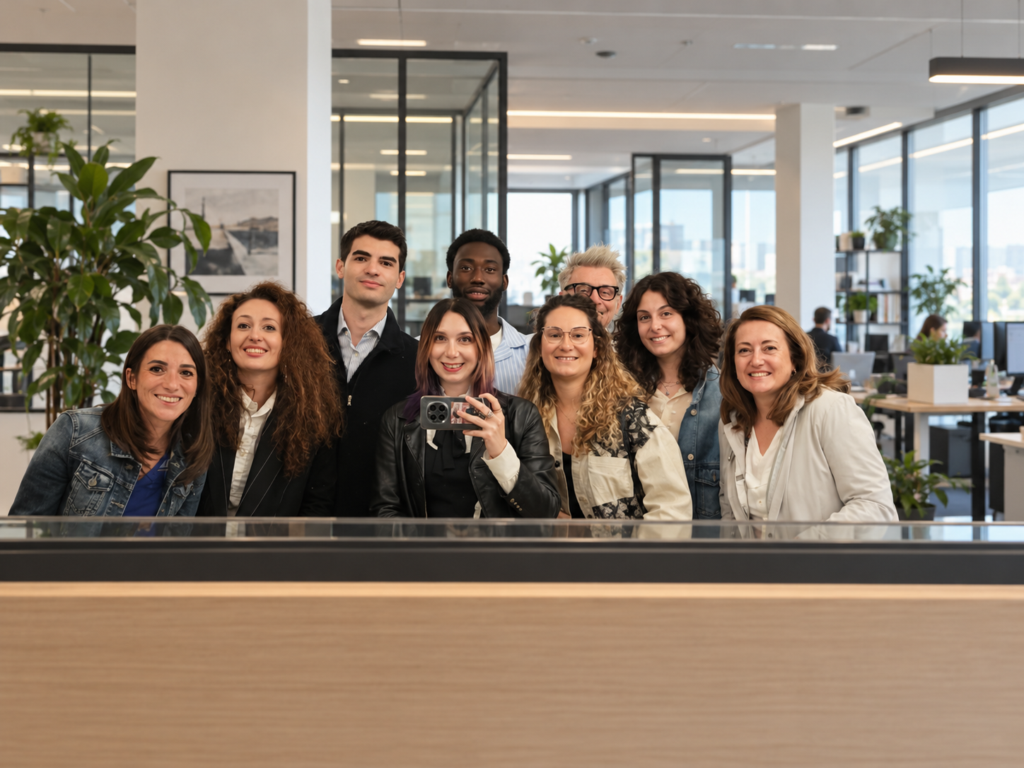
Manufacturing, Quality, Regulatory Affairs, and colleagues in Israel may all join a project from the beginning, each bringing its own insights. They look at what the product needs to do, how it could be manufactured, what regulatory requirements apply, and what the project will require.
“It’s extremely important to define the requirements clearly, so we know exactly what we’re developing and nothing critical is overlooked.”
They also agree on responsibilities, customer communication, milestones, and the working plan at a kick-off meeting, then meet regularly as the project develops.
Working Through the Options
Once the specifications are clear, the team can explore different ways to solve the problem.
For the customer’s ophthalmic procedure, Marisa’s team had to work out the relationship between bags, connectors, containers, and the customer’s existing equipment. They compared configurations, sketched different approaches, and built prototypes.
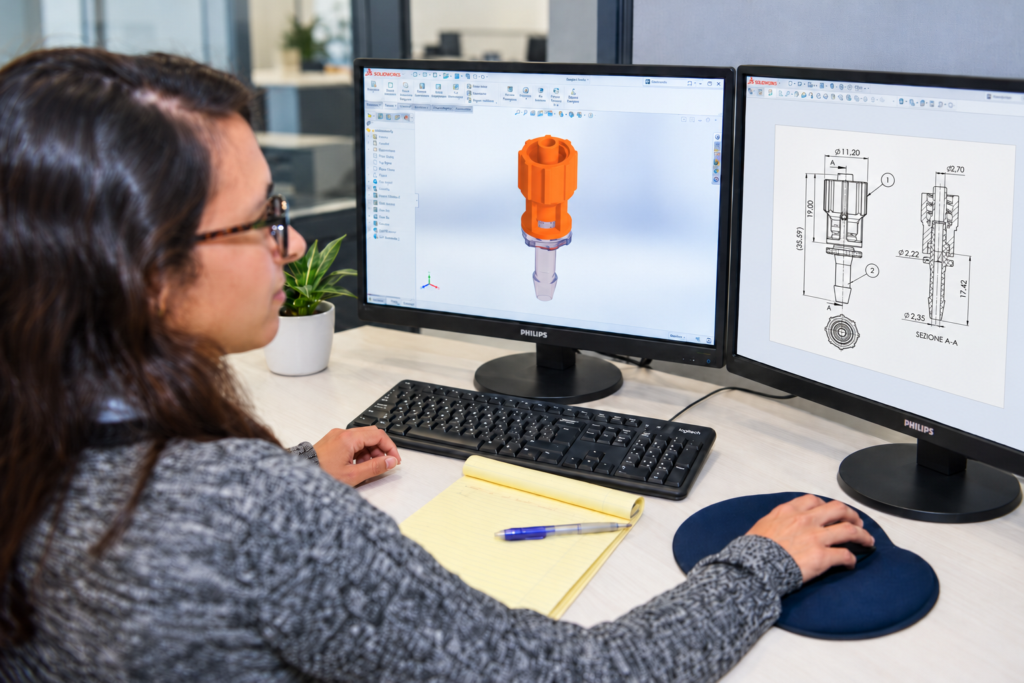
Another customer brought the team a fluid-delivery cassette used with a specialized pump for delivering contrast media. They wanted to replace a complex connector that had been causing problems in clinical use. Marisa’s engineers developed two alternative designs and produced prototypes for evaluation.
Those projects rely on experience built over time. Within the team, individual engineers develop deeper knowledge in particular products and technical areas.
One person may become the reference point for needleless injection valves. Others specialize in CT measurement, laboratory verification, technical documentation, materials, or project management.
“For each category,” says Marisa, “there is someone who really knows the product and becomes the point of reference.”
Room for Creativity
Marisa gives the experienced engineers on her team considerable autonomy.
“I prefer to give general guidelines and set regular checkpoints rather than closely supervise every activity,” she says. “We have senior people who are used to collaborating with others and working with a lot of independence.”
At the same time, she keeps the team coordinated by establishing clear priorities for the department.
“To achieve project goals, you need a clear and stable direction,” Marisa says. “If something is the highest priority today, and two weeks later something else becomes the highest priority, the team can’t stay focused.”
After more than 15 years with Elcam Medical and over two decades in the medical device industry, Marisa says the pressures shaping development have changed. Regulatory shifts and changing supplier economics sometimes send engineers scrambling to find new approaches for existing products.
“We need to think differently and take a broader, longer-term view of what is happening in the market and what may be coming next,” she says.
Even after all her years with the company, Marisa says, her favorite part of the job is still shaping a project from the start. “The part I enjoy most is the beginning of the process,” she says. “You engage with the customer, define the requirements, agree on the process and the proposed solution, and then you’re ready to begin.”
As Marisa’s team has shown, that’s the true value of bringing engineering in early: the sooner the questions are surfaced, the more room there is for engineering creativity to find and develop a solution that fits the application.

